Hardwood Floor Water Damage in Marietta: Drying, Cupping & Saving Your Floors
Water on a hardwood floor in Marietta is a race against the clock — Georgia humidity turns cupping into permanent damage fast. Learn how to tell if your floors can be dried in place, when cupping flattens out, and when boards need to come up.
Quick Answer
Hardwood floor water damage in Marietta needs fast action: remove standing water immediately, then dry the boards and the subfloor beneath them — cupping often flattens out if drying starts within 24–48 hours. Georgia humidity slows drying, so fans and dehumidifiers are essential. If cupping persists, boards may need refinishing or replacement. For emergency water removal, call +1 (470) 804-0012.
Hardwood floors are common in Marietta homes — from the oak planks in 1970s ranches in East Marietta to wide-plank floors in newer West Cobb builds — and they are one of the most vulnerable surfaces when water gets in. A burst pipe, a dishwasher leak, or a slab leak can soak a floor in minutes, and what happens in the next day or two decides whether a water damaged hardwood floor survives or has to be torn out.
This guide explains how water damages hardwood, what cupping and crowning mean, how drying in place works, and when sanding or replacement is the answer.
Water on your hardwood floor right now? Do not wait to see how bad it gets — call +1 (470) 804-0012 for emergency response in the Marietta area.
How Water Damages a Hardwood Floor
Hardwood is wood, and wood absorbs water:
- •Surface water sits on the finish first. A sealed finish buys you minutes to hours, not days. Once water gets past the finish through seams, scratches, or worn spots, it soaks into the wood fibers.
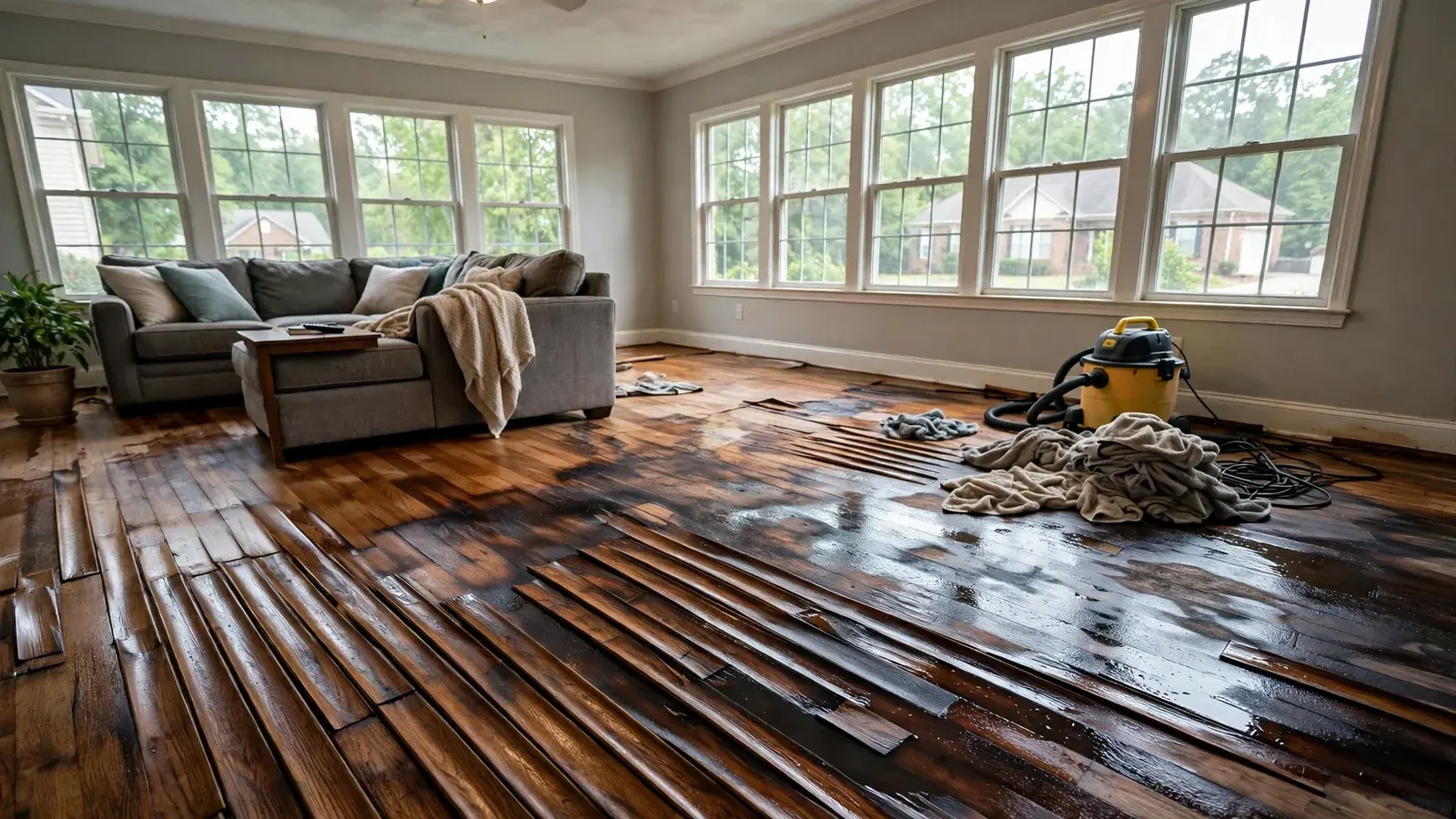
- •Swelling. Wet wood fibers expand. Because each board is locked in place by its neighbors, it has nowhere to go sideways — so it pushes upward at the edges. That raised-edge shape is cupping.
- •Subfloor saturation. Water that reaches the subfloor underneath (plywood or OSB in most Marietta homes, or a concrete slab in slab-foundation homes) keeps feeding moisture back into the boards from below, long after the surface looks dry.
- •Finish damage and staining. Standing water clouds, whitens, or lifts the finish, and dark stains appear when water carries tannins out of the wood or mildew forms in the grain.
- •Permanent deformation. If boards stay wet long enough, the wood fibers set in their swollen shape — and no drying will bring the floor back flat.
The critical window is the first 24–48 hours. Dry a floor inside that window and most cupping reverses. Wait a week in Georgia humidity and the damage is often permanent.
Cupping, Crowning, and Buckling — What's Happening to Your Floor
Hardwood floor cupping, crowning, and hardwood floor buckling are three stages of the same problem — each one a step worse than the last:
- •Cupping. The edges of each board rise higher than the center, like a shallow bowl. The most common sign of water damage and the most recoverable — it means the bottom of the board is wetter than the top, and it often flattens as the floor dries evenly.
- •Crowning. The center of the board rises above the edges — the opposite of cupping, usually caused by sanding a cupped floor while it was still wet. Crowning is harder to fix than cupping.
- •Buckling. Boards lift off the subfloor entirely, sometimes tenting up several inches — severe saturation, and the affected boards, often with the subfloor beneath them, usually must be replaced.
A slight ridge at each seam with boards still flat on the subfloor is likely cupping — and time is still on your side. If boards are tenting or pulling away, stop and get professional help.
If your floor is buckling or water is still spreading, call +1 (470) 804-0012 for emergency response in the Marietta area. Fast extraction keeps a cupping problem from becoming a replacement job.
What to Do in the First Hours After Water Hits Your Hardwood
Act fast and in this order:
- 1.Stop the water at its source. Shut off the main valve for a burst pipe, or the supply valve behind the appliance for a fixture leak.
- 2.Remove standing water immediately. Use a wet vacuum, towels, or a mop — every hour of standing water pushes more moisture into the seams.
- 3.Clear the area. Move furniture, rugs, and anything sitting on the wet boards — rugs trap moisture against the wood and leave stains. Lift furniture legs onto foil or blocks so they don't stain the finish.
- 4.Photograph everything. Wide shots of the affected area and close-ups of cupping, staining, and the water source for your insurance record.
- 5.Start airflow and dehumidification. Open windows if the weather is dry, run ceiling fans, and put a dehumidifier in the room. In Marietta's humid climate, fans alone are rarely enough — a dehumidifier is what lets the boards release their moisture.
- 6.Do not sand or refinish yet. A cupped floor sanded flat while still wet will crown as it dries. Wait until the floor is fully dry and flat.
Don't crank the heat to speed drying — high heat dries the surface fast while the bottom stays wet, which can worsen cupping or cause cracking.
Drying in Place vs. Removing Boards
Whether your floor can be dried in place depends on how much water got in, how long it sat, and what is underneath.
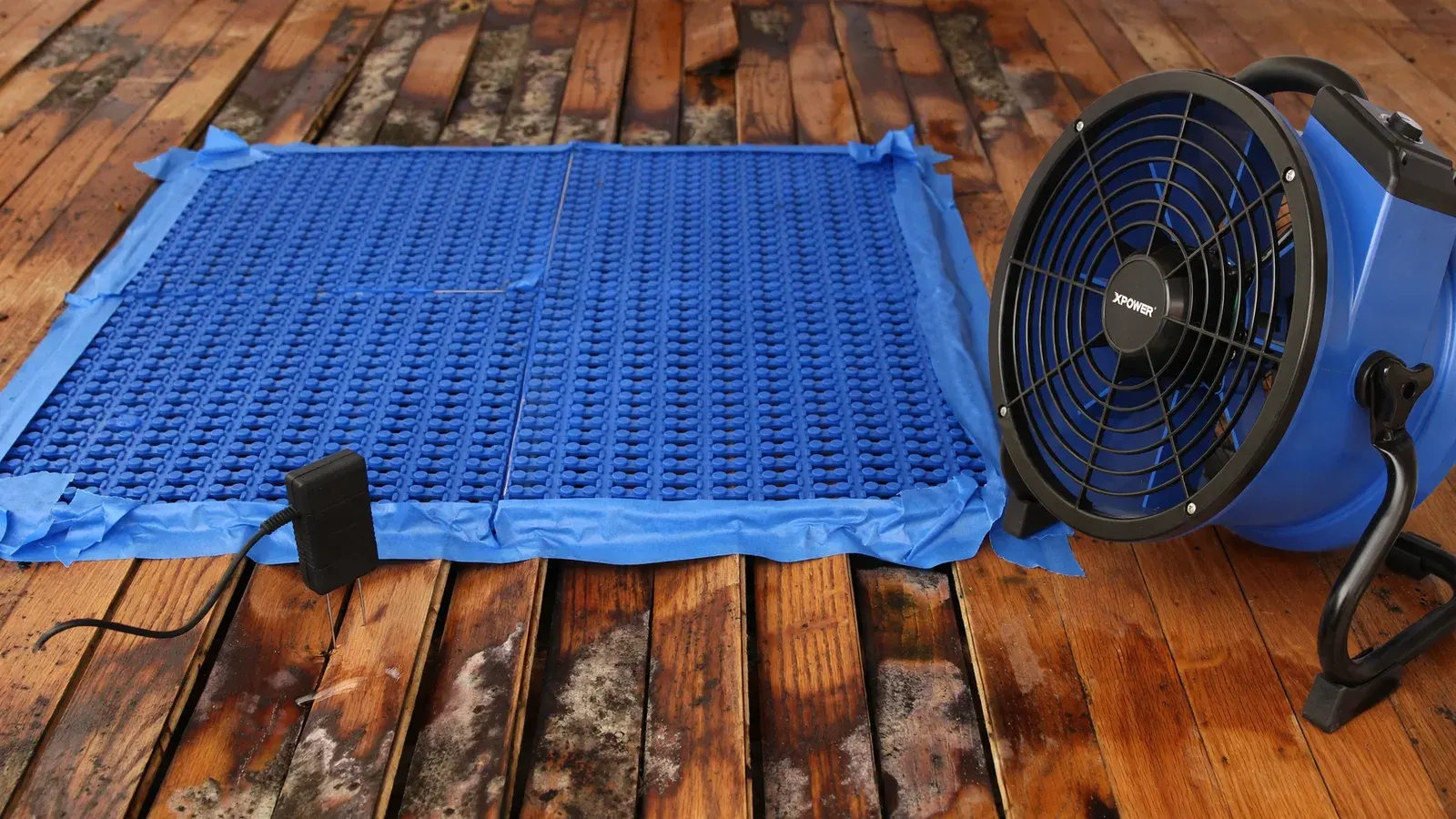
Drying in place usually works when:
- •The water was removed within a few hours, and cupping is mild — edges raised slightly, boards still firmly attached.
- •The subfloor is plywood or OSB and is drying out alongside the boards.
- •Moisture readings in the wood are trending down steadily over several days.
Professional drying uses high-volume air movers across the floor, dehumidifiers pulling moisture from the air, and sometimes floor-drying mats that pull moisture directly from the boards and subfloor. Drying typically takes 3–7 days, tracked with a moisture meter — the floor is dry when readings return to the normal range for the home, within a few points of unaffected boards elsewhere in the house.
Boards usually need to come up when:
- •Water sat for days, or the leak was hidden (a slow slab leak or a dishwasher supply line dripping behind cabinets).
- •Boards are buckling or have pulled loose from the subfloor.
- •The subfloor is saturated, warped, or showing signs of mold growth.
- •Cupping remains severe after a full drying cycle, or the floor is engineered hardwood with a thin veneer that has delaminated — refinishing isn't an option then.
Removing boards is how the subfloor gets dried and inspected. A wet subfloor left in place keeps feeding moisture back into new boards and can grow mold out of sight for months — it gets dried, treated, and verified dry before any new flooring goes down. For how a professional drying job is sequenced, see our water damage restoration process guide.
How to Fix Water Damaged Hardwood Floors: Sanding and Refinishing
Often, a cupped floor can be saved — but only after it is completely dry and settled back flat:
- 1.Dry fully first. Moisture readings must be back to normal and stable for several days — sanding a floor that is still drying guarantees crowning later.
- 2.Let the floor acclimate. Give the boards a few weeks to settle after drying — cupping that looks severe on day three can be nearly flat by day fourteen.
- 3.Sand lightly, or lace in boards. If the floor is flat again but the finish is damaged, a screen-and-recoat or light sanding and refinishing can restore it. A few badly cupped or stained boards can be laced in — new boards woven into the existing floor and refinished to blend.
The honest limit: if more than about a third of the boards in a room are permanently cupped, heavily stained, or buckled, replacing that room's flooring is usually the better investment.
Why Marietta's Climate Makes Hardwood Water Damage Worse
Georgia humidity is the hidden factor in every hardwood water-damage job here. Marietta summers run humid for months, and many homes — especially older ranches and split-levels in East Cobb — have crawlspaces that stay damp year-round. That baseline moisture means floors dry slower, hidden leaks last longer before cupping shows, and mold can start on wet wood within 24–48 hours.
Homes on slab foundations face a different risk: a slab leak pushes water up through the slab and into the flooring from below, often with no visible source. Cupping in the middle of a room with no appliance nearby is a real sign of one. For prevention habits that catch these problems early, see our guide to preventing water damage in Marietta homes.
What Insurance Usually Covers — and What to Document
Sudden, accidental water damage to a wood floor — a burst pipe, a failed appliance hose — is typically covered under standard Georgia homeowners policies, including drying and repairing or replacing damaged flooring. Damage from a leak that ran for weeks unnoticed, or from deferred maintenance, is often excluded. Photograph the water source, the affected floor, and any cupping or staining, and keep receipts for emergency water removal. For the full breakdown, see our homeowners insurance guide.
Frequently Asked Questions About Hardwood Floor Water Damage
Will cupped hardwood floors flatten out on their own?
Often, yes — if drying starts within 24–48 hours and the subfloor dries too. Mild cupping commonly flattens over one to three weeks. Severe cupping that persists after the floor is fully dry usually needs sanding or board replacement.
How long does it take to dry a wet hardwood floor?
With professional equipment — air movers plus dehumidifiers — most floors take 3–7 days to reach normal moisture levels. In Marietta's humid climate it can take longer if the subfloor is saturated. Moisture meter readings, not the calendar, decide when drying is done.
How do you fix water damaged hardwood floors?
Start by stopping the source and removing standing water, then dry the boards and the subfloor beneath them — most cupped floors flatten as they dry evenly. Once moisture readings are back to normal and the floor is flat, sanding and refinishing restores the finish. Boards that buckled, delaminated, or stayed cupped after a full drying cycle are replaced, and the subfloor is verified dry before any new flooring goes down.
Should I sand my cupped floor right away?
No. Never sand a cupped floor while it is still wet — as the floor finishes drying it will crown, the center rising above the edges, which is harder to fix. Wait until the floor is fully dry and flat.
Does homeowners insurance cover hardwood floor water damage?
Sudden and accidental damage, like a burst pipe or appliance failure, is typically covered under standard Georgia homeowners policies. Long-term leaks and neglected maintenance usually are not. Document the damage with photos and contact your insurer promptly. (See the Georgia homeowners insurance guide for the full breakdown.)
When is a hardwood floor beyond saving?
When boards are buckling off the subfloor, the veneer on engineered flooring has delaminated, cupping remains severe after a full drying cycle, or the subfloor is warped or mold-damaged. At that point, replacement of the affected boards — or the room — is the practical answer.
Data Sources & Standards Referenced
Water on your hardwood floors right now? Don't wait for cupping to set in — call +1 (470) 804-0012 for emergency response in the Marietta area.
Related Guides
Marietta Service Hubs
Water damage restoration services are available across Cobb County municipalities:
Complementary Restoration Services
Explore additional specialized water damage, sewage, pipe repair, and flood cleanup services in Marietta.
Water Damage Restoration
Professional water damage cleanup, water extraction, structural drying, and damage restoration for homes, apartments, and commercial properties in Marietta and Cobb County.
Burst & Leaking Pipe Repair
Water extraction, wall & ceiling moisture detection, structural drying, and water damage cleanup after burst or leaking pipes in Marietta.
Mold Remediation & Removal
Professional mold containment, structural surface cleaning, HEPA air filtration, and underlying moisture remediation in Marietta and Cobb County.
Need Water Damage Restoration in Marietta?
Call now to discuss your water damage situation and the next steps.