Water in Crawl Space: Causes, Signs & What to Do in Marietta
Most Marietta homeowners never look under their floors — and that's exactly why crawl space water damage goes unnoticed for months. Learn the signs of a wet crawl space, why Georgia's clay soil and humidity make it worse, and what to do the moment you find water under your home.
Quick Answer
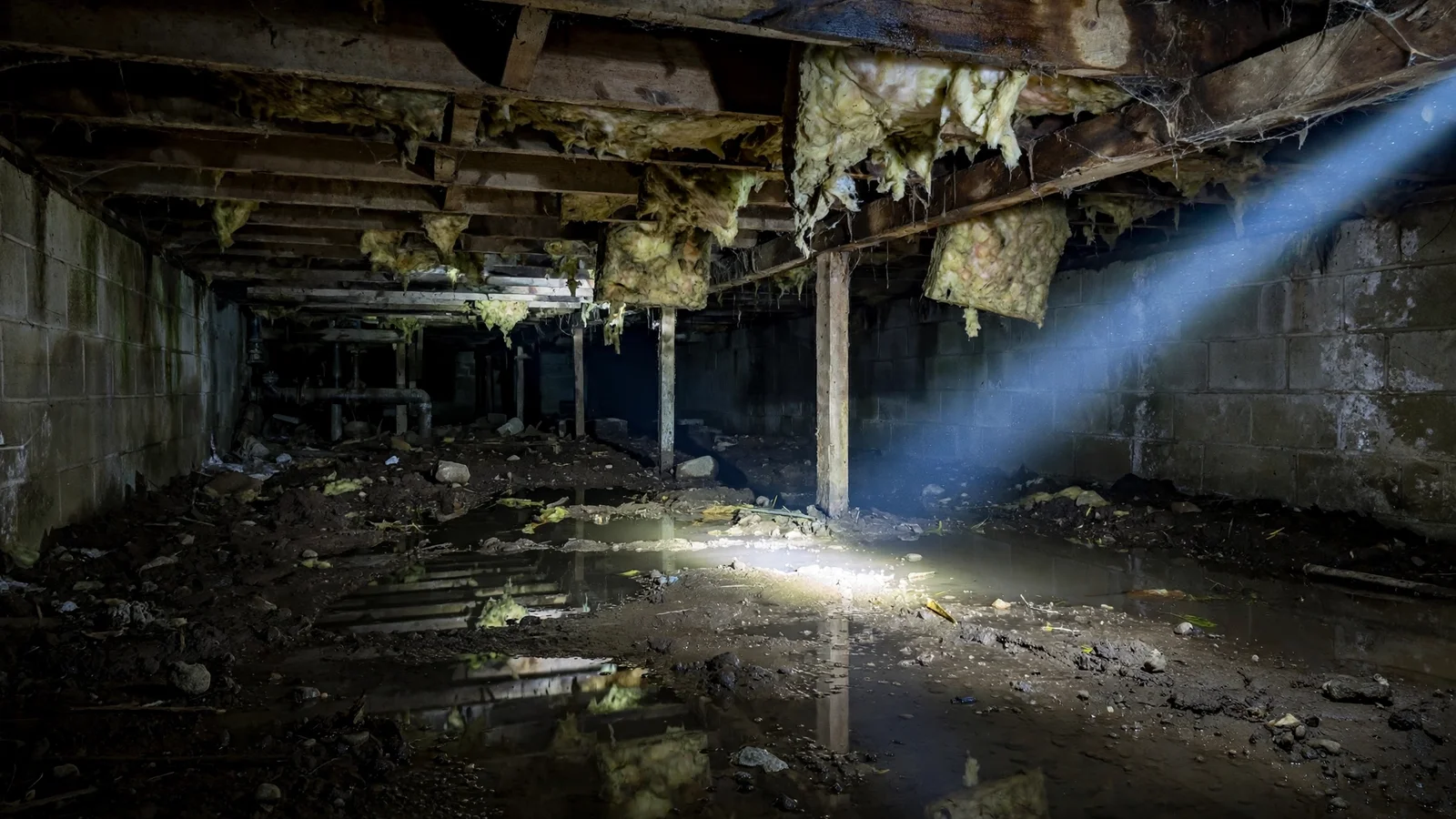
Water in crawl space areas often goes unnoticed for months because homeowners rarely look under the floor. Standing water, failed vapor barriers, and Georgia's humid air feed mold and wood rot silently beneath your home. If you see — or smell — trouble under your house, call +1 (470) 804-0012 for emergency response before the damage reaches your floors.
Out of sight really does mean out of mind with crawl spaces. A burst pipe under a kitchen sink gets noticed the same day; a slow leak under that same kitchen — dripping into a dark crawlspace — can run for months. By then, the subfloor is soft, floor joists show rot, and mold has been spreading undisturbed.
Across Marietta and Cobb County, crawl spaces are everywhere: in 1950s–1970s ranch homes, in older properties off the historic square, and in newer builds where the builder chose a vented foundation over a slab. If your home sits on a crawlspace, knowing the signs of trouble — and what to do about them — is one of the highest-value things a homeowner here can learn.
If you're smelling mustiness through your floors right now or you've spotted water under the house, don't wait for it to dry on its own — call +1 (470) 804-0012 for emergency response.
Why Crawl Spaces in Marietta Homes Get Wet
Crawl space water damage usually comes from a small set of causes, and Marietta's conditions make every one of them worse:
- •Georgia's red clay soil. Much of Cobb County sits on dense red clay that drains poorly. After heavy rain, groundwater sits against your foundation instead of percolating away — and finds its way in through vents, cracks, and the soil floor itself.
- •Poor exterior grading. The soil around many older Marietta homes slopes toward the foundation rather than away from it. Every rainstorm then funnels water straight to the crawlspace instead of to the yard.
- •Clogged or misdirected gutters. Pine needles and leaves from Georgia's heavy tree canopy clog gutters fast. Overflowing gutters dump water right at the foundation line, and downspouts that end at the house wall feed the crawlspace directly.
- •Plumbing leaks hidden from view. Supply lines, drain lines, and washing-machine discharge lines often run through the crawlspace. A pinhole leak or a loose drain fitting drips silently into the dark — sometimes for months. (This is the gray-water class of damage — see our guide on water damage categories and classes for what that means.)
- •Condensation in vented crawlspaces. Georgia's warm, humid air enters through foundation vents and meets cooler ductwork and pipes, condensing into standing water on surfaces. In summer, a vented crawlspace can be the dampest part of the house — a classic crawl space moisture problem that never involves a single drop of rain.
- •High water table after storms. Slow-moving thunderstorms and tropical-system remnants can drop several inches of rain in hours. Groundwater rises, and low-lying crawlspaces in hilly Marietta neighborhoods take the hit.
Signs of a Wet Crawl Space (How to Spot It Without Going Under)
Most homeowners never crawl under the house — and honestly, you shouldn't have to. These signs tell you there's a problem worth investigating:
- •A musty or earthy smell in the house, especially near floor level or when the HVAC first kicks on. Ductwork often runs through the crawlspace, so damp air gets distributed through the whole home.
- •Sagging, bouncy, or uneven floors. When floor joists and subflooring absorb water, they soften and deflect underfoot. A floor that flexes where it didn't before is a red flag.
- •Cupped or buckled hardwood floors. Wood flooring draws moisture from below. Boards that cup (edges higher than centers) or buckle are signaling excess moisture under the house.
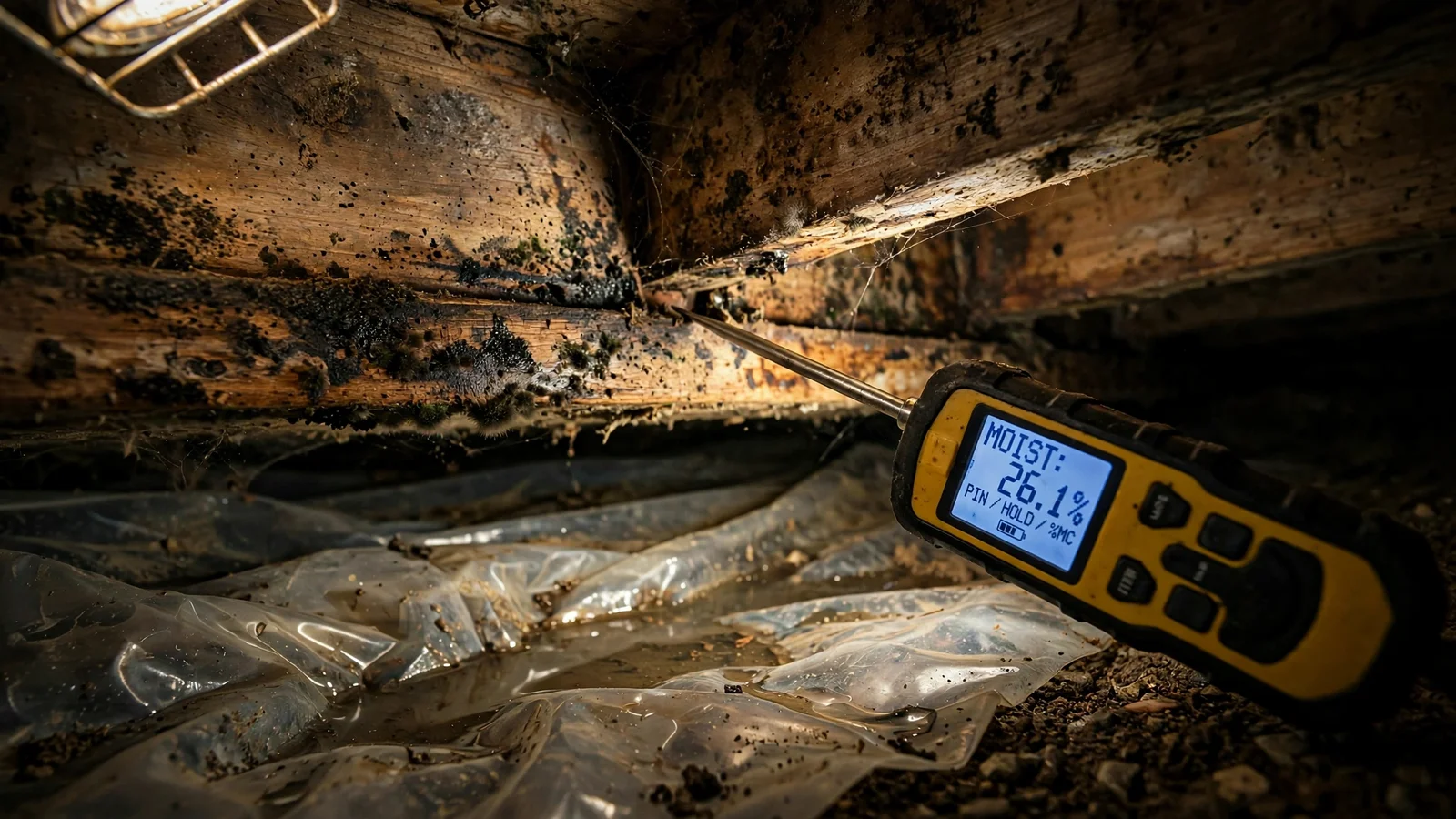
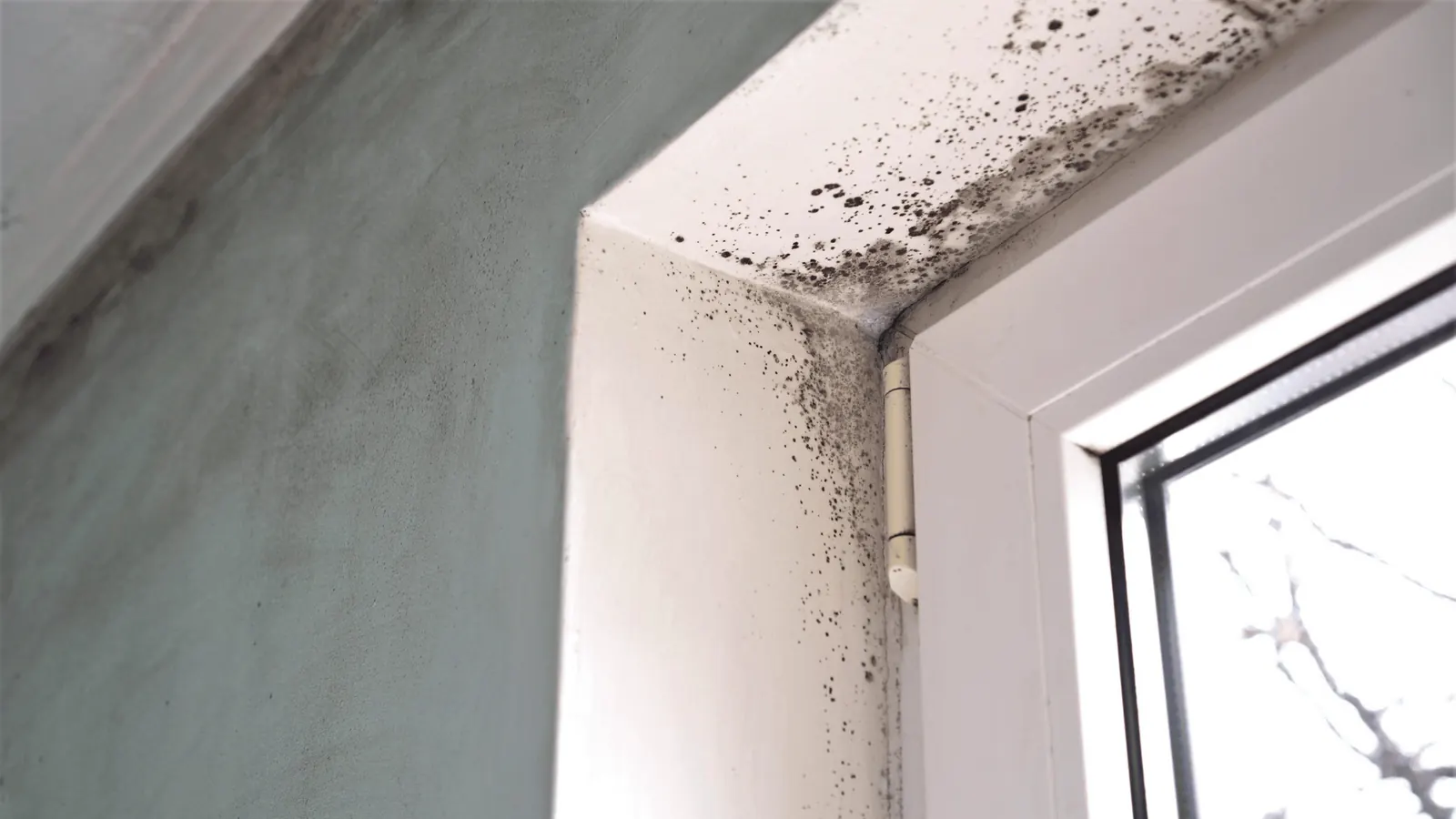
- •Visible mold or mildew on floor joists, subflooring, or foundation walls when you peek through a crawlspace vent or access door.
- •Efflorescence on foundation walls — white, powdery salt deposits that appear where water has been migrating through concrete block. It means water is moving through the foundation regularly.
- •Standing water or saturated soil visible through the crawlspace access or vents after rain.
- •Rising indoor humidity that the air conditioner can't seem to control, or condensation on windows and ducts.
- •Increased pest or termite activity. Damp wood attracts termites, carpenter ants, and wood-boring beetles — all of which thrive in a wet crawlspace.
- •Higher water bills with no visible leak inside — the leak may be in a crawlspace supply line.
You Found Water in Your Crawl Space: What to Do Right Now
A wet crawlspace is an emergency in slow motion — mold can begin growing within 24–48 hours in Georgia's humidity, and every week of delay lets rot spread deeper into your framing. Work through these steps in order:
- 1.Don't wade in blindly. Never enter a crawlspace with standing water near electrical wiring, junction boxes, or the panel feed — electrocution is the first danger. If you smell sewage, stay out entirely; that's a health hazard, not a DIY situation.
- 2.Document what you can see safely. Photograph or video through the access door: the water level, any visible mold, wet insulation, dripping pipes. Note the date and whether it appeared after rain or seemingly out of nowhere. Your insurance claim may depend on this record.
- 3.Stop the source if it's safe and obvious. A burst or leaking supply line may have a shut-off valve you can reach. If the water is rising with rainfall rather than flowing from a pipe, the source is groundwater or drainage — nothing you can shut off.
- 4.Move stored items and clear vents of debris — don't try to pump, dry, or treat anything yourself. Crawlspace air with heavy mold can be hazardous without protection, and improper drying can drive moisture deeper into framing.
- 5.Call for emergency help: +1 (470) 804-0012. Professional crawl space water damage service means finding the actual entry path, extracting standing water, drying the structure with commercial equipment (not just airing it out), and treating for mold. The water damage restoration process guide explains exactly what that looks like step by step.
Do not just "let it air out." Opening crawlspace vents during a humid Georgia summer invites more moisture in, not less — and water trapped in insulation and subflooring doesn't evaporate from the surface. Structural drying is a measured process, not a waiting game.
Why Waiting Is the Worst Option
Delay feels harmless with a wet crawlspace — but here's what time does to it:
- •Mold spreads within days. In Georgia's humidity, mold begins growing on wet wood, insulation, and drywall within 24–48 hours. From the crawlspace it colonizes ductwork and floor cavities, then rides the HVAC into the living space.
- •Wood rot compounds. Floor joists and subfloor that stay wet soften, sag, and eventually need structural replacement instead of simple drying. Rot discovered early is a drying job; rot discovered in a year can be a framing repair.
- •Termites love damp crawlspaces. Subterranean termites seek moist wood, and a wet crawlspace is an invitation. One problem becomes two.
- •Insurance gets harder. Most Georgia homeowners policies cover sudden and accidental water damage, but damage from a problem that went unaddressed for months can be classified as neglected maintenance and excluded. Documenting and acting promptly protects your claim — our Georgia homeowners insurance guide covers the details.
How to Dry Out a Crawl Space — and Keep It Dry
Drying out a crawl space properly means extracting standing water, removing saturated materials, and running commercial dehumidification until wood moisture readings reach dry standards. Once the crawlspace is dry and repaired, these measures keep it that way:
- •Grade the soil away from the foundation. The ground should slope away from the house in every direction — this single fix solves more crawlspace water problems than anything else.
- •Extend downspouts 6+ feet from the house. Roof water should land well away from the foundation, not at its base.
- •Keep gutters clean. In Marietta's tree-heavy neighborhoods, clean gutters at least twice a year — clogged gutters overflow directly onto the foundation line.
- •Install or maintain a vapor barrier. A heavy-duty polyethylene liner over the soil floor blocks ground moisture from rising into the space. Check existing barriers for tears, displaced edges, and ponding on top.
- •Consider a crawlspace dehumidifier. In Georgia's climate, a dedicated crawlspace dehumidifier holds humidity below the levels where mold and condensation thrive — especially in sealed or encapsulated spaces.
- •Seal foundation vents in summer (or encapsulate). Vented crawlspaces admit humid outdoor air all summer. Many Marietta homeowners seal vents seasonally or move to full encapsulation with conditioned air.
- •Fix plumbing leaks immediately. Any work on supply or drain lines should include a crawlspace inspection — a dripping fitting undoes every other prevention measure.
- •Inspect twice a year. Peek through the access door every spring and fall: look for standing water, new mold, sagging vapor barrier, and condensation on ducts. Two minutes, twice a year, catches most problems early.
For a full home-wide checklist, see the guide on preventing water damage in Marietta homes.
Frequently Asked Questions About Crawl Space Water Damage
How do I know if my crawl space has water damage without going under the house?
Musty smells at floor level, sagging or bouncy floors, cupped hardwood, efflorescence (white powder) on foundation walls, rising indoor humidity, and termite activity are all signs. A quick look through the access door or a vent after rain tells you a lot.
Is standing water in a crawl space normal after heavy rain?
No — standing water in a crawl space is never normal, even after heavy Georgia rain. It always means water is entering through grading, drainage, plumbing, or groundwater. Even small amounts sustain mold growth and wood rot in Georgia's humidity.
Can I dry out a wet crawl space myself with fans?
Household fans move air but can't achieve structural drying. Commercial dehumidification and air movement are needed to pull moisture out of framing, insulation, and subflooring — surface drying leaves the core wet and mold keeps growing inside.
Does homeowners insurance cover crawl space water damage?
Sudden and accidental damage (like a burst pipe) is typically covered under Georgia policies, but long-term seepage or damage from neglected maintenance is usually excluded. Documenting the damage and acting promptly gives your claim the best chance. (The Georgia homeowners insurance guide covers the details.)
What is a vapor barrier, and does my crawl space need one?
A vapor barrier is a heavy plastic sheeting laid over the crawl space soil floor to block ground moisture from rising. Most Marietta crawl spaces benefit from one — without it, soil moisture evaporates directly into the space year-round.
Why is mold worse in Georgia crawl spaces?
Georgia's combination of warm temperatures, high humidity, and vented crawl spaces creates ideal mold conditions: moisture, darkness, and organic material (wood, paper-faced insulation). Once established, mold spreads through ductwork into the whole house — which is why extraction and drying need to start fast.
Who do I call for water in my crawl space?
Call +1 (470) 804-0012 to get connected with an independent local provider who handles crawl space water damage — standing water extraction, structural drying, and mold treatment for Marietta and Cobb County homes.
Data Sources & Standards Referenced
Found water under your home, or smelling something musty through the floors? Don't let hidden damage keep spreading — call +1 (470) 804-0012 for emergency response in the Marietta area.
Related Guides
Marietta Service Hubs
Water damage restoration services are available across Cobb County municipalities:
Complementary Restoration Services
Explore additional specialized water damage, sewage, pipe repair, and flood cleanup services in Marietta.
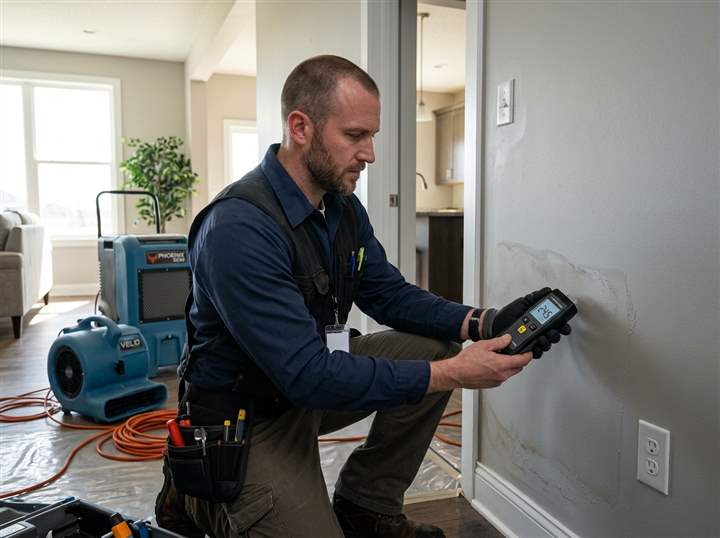
Crawl Space Water Damage
Standing water extraction, subfloor joist drying, saturated vapor barrier removal, and structural moisture remediation for crawl spaces in Marietta.
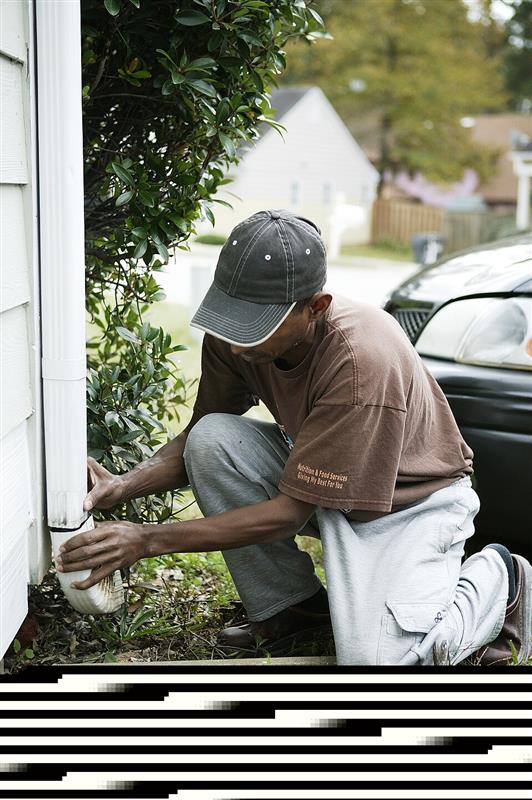
Water Damage Restoration
Professional water damage cleanup, water extraction, structural drying, and damage restoration for homes, apartments, and commercial properties in Marietta and Cobb County.
Mold Remediation & Removal
Professional mold containment, structural surface cleaning, HEPA air filtration, and underlying moisture remediation in Marietta and Cobb County.
Need Water Damage Restoration in Marietta?
Call now to discuss your water damage situation and the next steps.