Roof Leak Water Damage in Marietta: How to Find the Leak, Signs & First Steps
A roof leak in Marietta often hides in the attic for weeks before it stains a ceiling. Learn the early signs of a roof leak, how to find where the water gets in, what to do the moment you spot it, and how to protect a Georgia home from the next storm.
Quick Answer
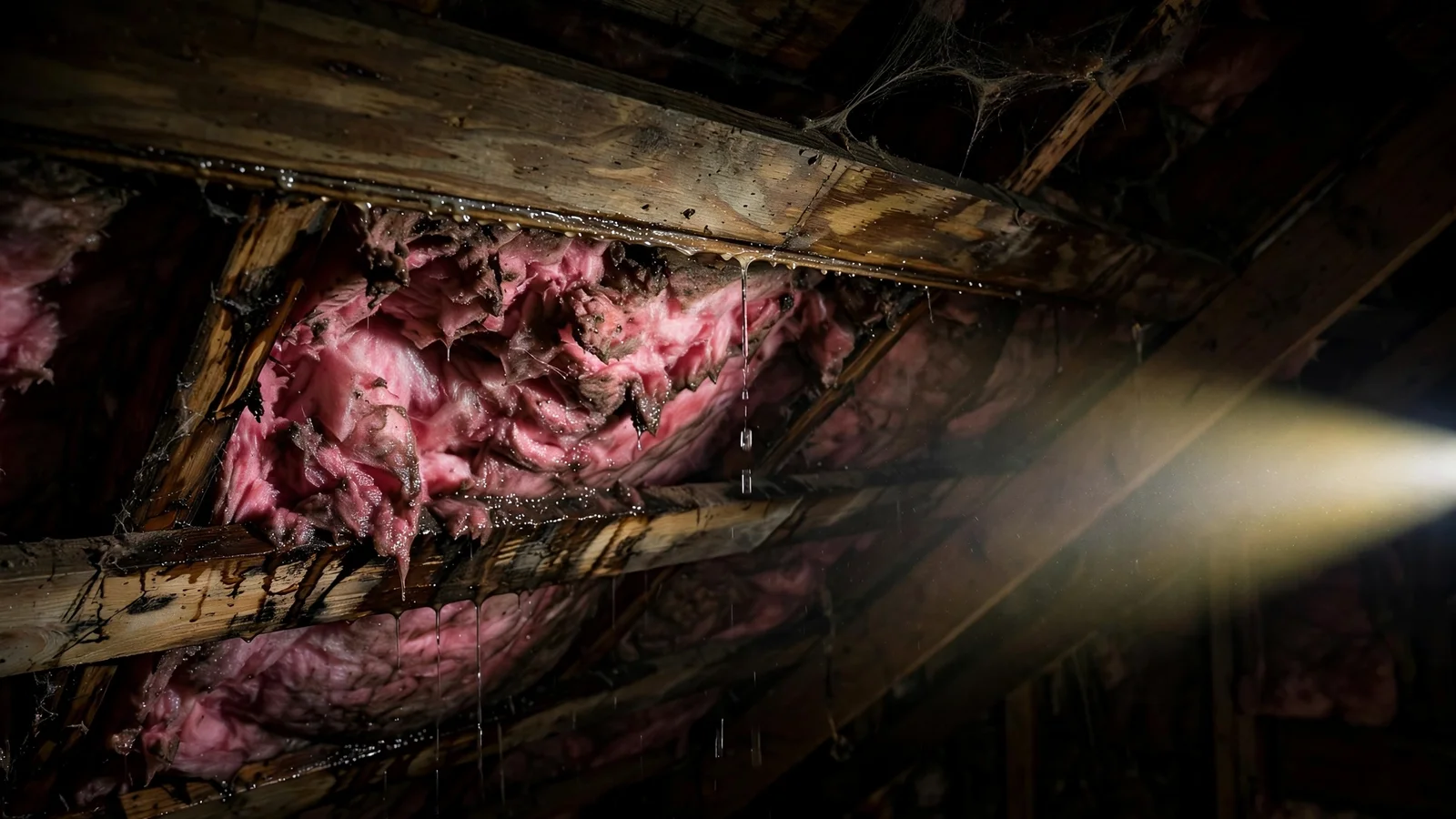
Roof leak water damage in Marietta usually starts small — a failed flashing, a lifted shingle, or a cracked vent boot lets storm water into the attic, where it soaks insulation and framing long before a ceiling stains. If you find active dripping, contain it, protect belongings below, and call for emergency response at +1 (470) 804-0012.
Roof leak water damage is one of the sneakiest problems a Marietta homeowner can face. Unlike a burst pipe, it rarely announces itself with a flood. Storm water can enter through a tiny roof defect, travel along rafters, drip into insulation, and sit quietly in the attic for weeks. By the time a brown stain appears on a bedroom ceiling, the damage above it is often far worse than the stain suggests.
That delay is what makes attic leaks so costly in Cobb County. Georgia humidity keeps damp insulation and framing wet long after the rain stops, and mold can begin growing on wet drywall and wood within 24–48 hours. This guide covers why Marietta roofs leak, the early signs to catch, what to do when you find water, and how to reduce the risk before the next storm.
Found an active roof leak or a spreading ceiling stain right now? Move belongings out of the way, place a bucket under the drip, and call +1 (470) 804-0012 for emergency response.
Why Marietta Attics Hide Roof Leaks So Well
Many Marietta homes — mid-1900s ranches, split-levels, and newer two-story builds across East and West Cobb — have attics that are rarely visited. Insulation blankets the ceiling joists and decking hides the underside of the roof, so a small leak can soak into insulation without ever dripping visibly into a living space. Water also rarely falls straight down: it follows the roof deck and rafters, and may emerge feet away from the entry point. That is why a hallway stain does not always mean the leak is directly above it.
Georgia weather adds pressure in several ways. Heavy summer thunderstorms drive rain sideways under shingles and flashing, and remnants of tropical systems can dump inches of rain in a day. Tall pines and hardwoods around Marietta lots drop debris that clogs valleys and gutters, forcing water back under the roofing. In winter, a cold snap followed by a warm, wet spell can open small gaps at flashing and vents. None of this requires a catastrophic storm — an ordinary aging roof with one weak detail is enough. Older homes often carry original flashing and cracked vent boots; newer homes can leak from a single poorly sealed nail.
The Most Common Roof Leak Sources in Cobb County
- 1.Flashing failures. Flashing seals the joints where the roof meets a chimney, wall, skylight, or dormer. When it lifts, rusts, or loses its sealant, water runs straight into the attic. Chimney flashing is a frequent culprit on older Marietta homes.
- 2.Lifted, cracked, or missing shingles. Wind, age, and heat curl and crack asphalt shingles. Once a shingle lifts, wind-driven rain gets underneath it and into the decking below. Missing shingles after a storm deserve attention even if no stain has appeared yet.
- 3.Worn vent boots and pipe collars. Plumbing vents and exhaust pipes pass through the roof with a rubber boot sealing the gap. Georgia heat and sun crack that rubber over time, opening a round path for rainwater.
- 4.Valleys and clogged gutters. Valleys channel large volumes of water, so debris or a worn shingle there matters more than on a plain slope. Gutters clogged with pine needles overflow, pushing water back under the roof edge and into the fascia and soffit.
- 5.Skylights and roof penetrations. Skylight curbs, satellite mounts, and added vents each create a penetration that must stay sealed. Sealant ages, and a skylight leak often shows up as a stain well away from the unit itself.
- 6.Condensation that mimics a leak. In a cold snap, frost can form on attic framing and melt later, and poor ventilation traps humid Georgia air that condenses on cold surfaces. Both leave dampness that looks like a roof leak but needs a different fix — have the attic inspected rather than assuming the source.
Signs of a Roof Leak: Early Attic Warnings Before the Ceiling Stains
Check the attic after a heavy storm and watch the ceilings below between storms. Catching a leak now keeps the job far smaller:
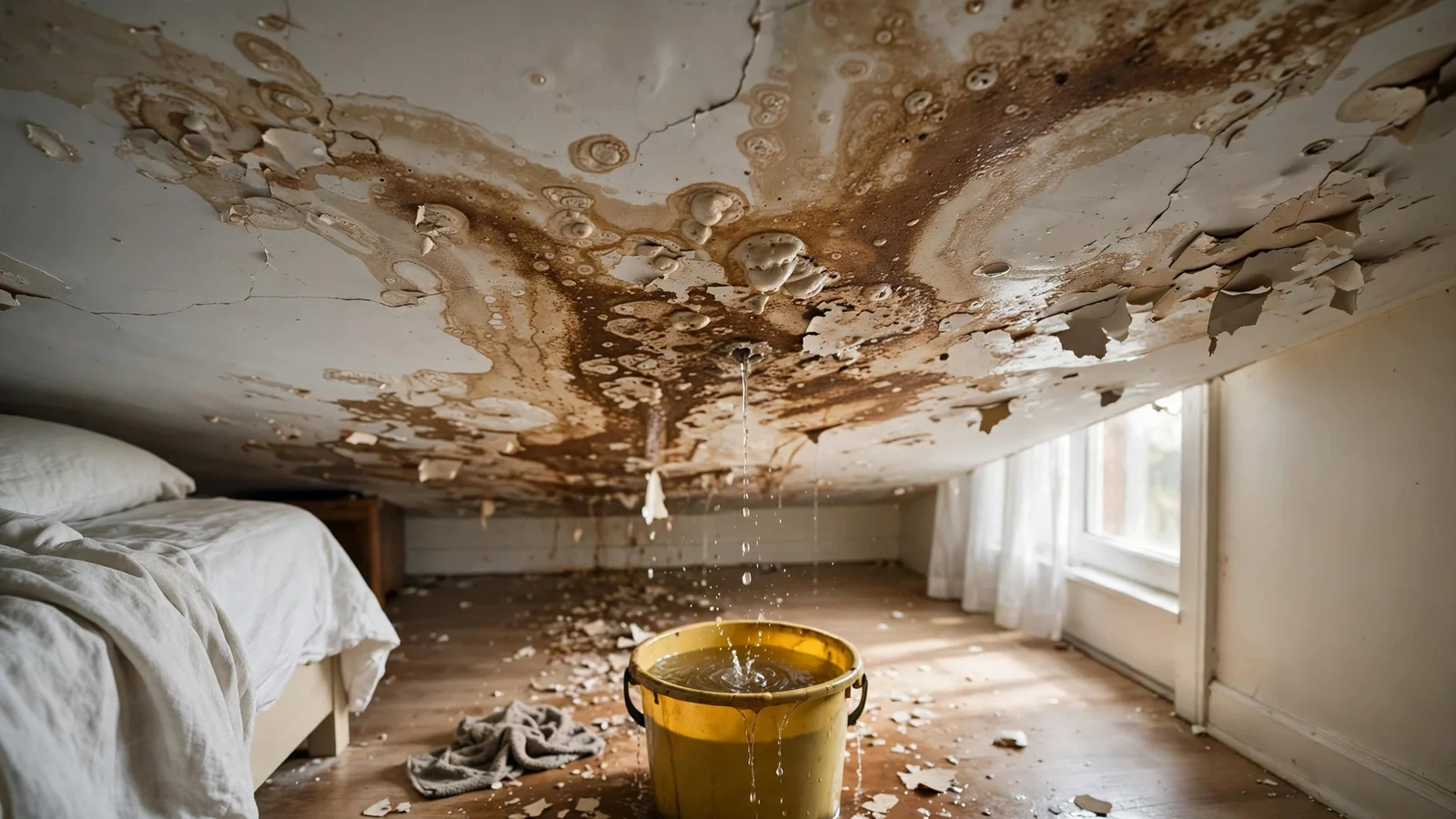
- •Brown or yellow stains on ceilings or upper walls, especially ones that darken or grow after rain.
- •Damp, compressed, or discolored attic insulation, or insulation that smells musty when you lift it.
- •Dark streaks or water marks on rafters, trusses, or the underside of roof decking.
- •A musty smell in an upstairs room or closet, even when no stain is visible yet.
- •Peeling paint, bubbling drywall, or sagging ceiling texture in a top-floor room.
- •Drips or daylight visible in the attic during rain — daylight through a gap is an open path for water.
In the attic, step only on joists or a stable walkway, and do not touch wet wiring or fixtures. If access is difficult or water is near electrical fixtures, stay out and get help.
What to Do the Moment You Find a Roof Leak
Act in this order:
- 1.Contain the drip. Place a bucket under the active drip and lay towels or plastic sheeting to protect flooring below. If a ceiling is bulging with trapped water, do not poke it — a sudden release can flood the room and pull down drywall.
- 2.Move belongings out of the way. Shift furniture, electronics, and stored items from under the leak path, including in the room below if water is travelling through a ceiling.
- 3.Protect the attic contents. Move stored boxes off the attic floor and away from the wet area. Wet cardboard and fabric feed mold quickly in Georgia humidity.
- 4.Check how far the water has travelled. Look in the rooms below, in closets, and around ceiling light fixtures beneath the attic. Water follows framing, so inspect beyond the visible stain.
- 5.Take photos and video. Document the leak point, wet insulation and framing, ceiling stains, and damaged belongings, and note when you first noticed them. This record supports your insurance claim and the drying plan. (See our Georgia homeowners insurance guide.)
- 6.Call for emergency response: +1 (470) 804-0012. Fast water extraction and structural drying in the first hours prevent the secondary damage — swollen drywall, warped framing, and mold — that turns a roof repair into a full restoration. (See our water damage restoration process guide.)
Do not wait for the next dry spell to "see if it stops." A leak that only appears in heavy rain still soaks insulation and framing every time it rains, and the attic does not dry on its own in humid conditions.
Why Waiting Turns a Small Leak Into a Big Restoration
Roof water starts as clean rainwater, but once it soaks insulation, drywall, and wood, the damage changes in kind. Wet insulation holds moisture against framing, drywall softens and sags, and mold can begin within a day or two of sustained dampness. (See our water damage categories and classes guide.) The longer the wait, the wider the area becomes: one flashing joint can saturate a bay of insulation, stain two rooms, and require removal of ceiling sections that could have been dried if caught early. Stop the water, dry the structure, then fix the roof detail that let it in.
How to Reduce Roof Leak Risk Before the Next Storm
- 1.Inspect the roof and attic twice a year — and after major storms. Look for lifted shingles, cracked vent boots, rusted flashing, debris in valleys, stains on decking, and damp insulation.
- 2.Keep gutters and downspouts clear. Pine needles and leaves are the usual blockage in Marietta. Clear gutters so water flows away from the roof edge instead of backing under it.
- 3.Trim overhanging branches. Branches that rub shingles wear them down, and falling limbs crack shingles and flashing. Keep limbs off the roof surface.
- 4.Fix worn details early. Cracked vent boots, dried sealant at skylights, and lifted flashing are small fixes when caught early and leak sources when ignored.
- 5.Check attic ventilation and watch ceilings after heavy rain. Good airflow reduces condensation that mimics leaks, and a quick walk through upstairs rooms after a storm catches new stains while they are still small.
Add the roof and attic to your seasonal checklist alongside the habits in our preventing water damage in Marietta homes guide.
Frequently Asked Questions About Roof Leak Water Damage
How do I find where a roof leak is coming from?
Start in the attic during or just after rain, tracing water marks uphill along rafters and decking toward the roof. The entry point is often feet from the ceiling stain, near flashing, a vent boot, a valley, or a skylight. If you cannot trace it safely, have it inspected.
Can a small roof leak cause mold?
Yes. In Georgia humidity, mold can begin growing on wet drywall, wood, and insulation within 24–48 hours. A slow leak that keeps insulation damp between storms is a common hidden mold source in Marietta attics.
Does homeowners insurance cover water damage from a leaking roof?
Sudden and accidental damage from a storm-related roof leak is typically covered under standard Georgia policies, though the worn roof component itself is usually not, and damage from long-neglected maintenance is often excluded. Document everything and contact your insurer promptly. (The Georgia homeowners insurance guide covers the details.)
Should I put a tarp on the roof myself?
Only if you can do so safely from the ground or a stable, dry position — never climb a wet, steep, or damaged roof. A temporary cover can limit further entry until a roofer repairs it, but the attic and ceilings underneath still need drying.
Why does the stain keep coming back after the ceiling is repainted?
Repainting covers the mark but not the moisture source. Until the roof detail is repaired and the wet insulation, framing, and drywall are dried or removed, every rain re-wets the same area and the stain returns.
How long does it take for an attic to dry after a roof leak?
It depends on how much insulation and framing got wet and on airflow, but a soaked attic does not dry in a day in Georgia humidity. Professional drying with airflow and dehumidification reaches the hidden moisture that surface drying misses.
Data Sources & Standards Referenced
Facing an active roof leak or a spreading attic stain right now? Don't wait for the next storm to make it worse — call +1 (470) 804-0012 for emergency response in the Marietta area.
Related Guides
Marietta Service Hubs
Water damage restoration services are available across Cobb County municipalities:
Complementary Restoration Services
Explore additional specialized water damage, sewage, pipe repair, and flood cleanup services in Marietta.
Roof Leak Water Damage
Ceiling water extraction, saturated attic insulation drying, thermal moisture mapping, and structural framing restoration after roof leaks in Marietta.

Ceiling Water Damage Repair
Ceiling stains, sagging drywall, and active drips in Marietta homes — the source above gets found, the cavity dried, and the ceiling restored properly.
Water Damage Restoration
Professional water damage cleanup, water extraction, structural drying, and damage restoration for homes, apartments, and commercial properties in Marietta and Cobb County.
Need Water Damage Restoration in Marietta?
Call now to discuss your water damage situation and the next steps.