Water Damage After a Fire in Marietta: Sprinkler & Firefighting Water Cleanup
The fire is out, but the water is still working against your home. Sprinkler discharge and firefighting water soak floors, walls, and belongings — and in Georgia's humidity, that water starts doing lasting damage fast. Here's what to do next in Marietta.
Quick Answer
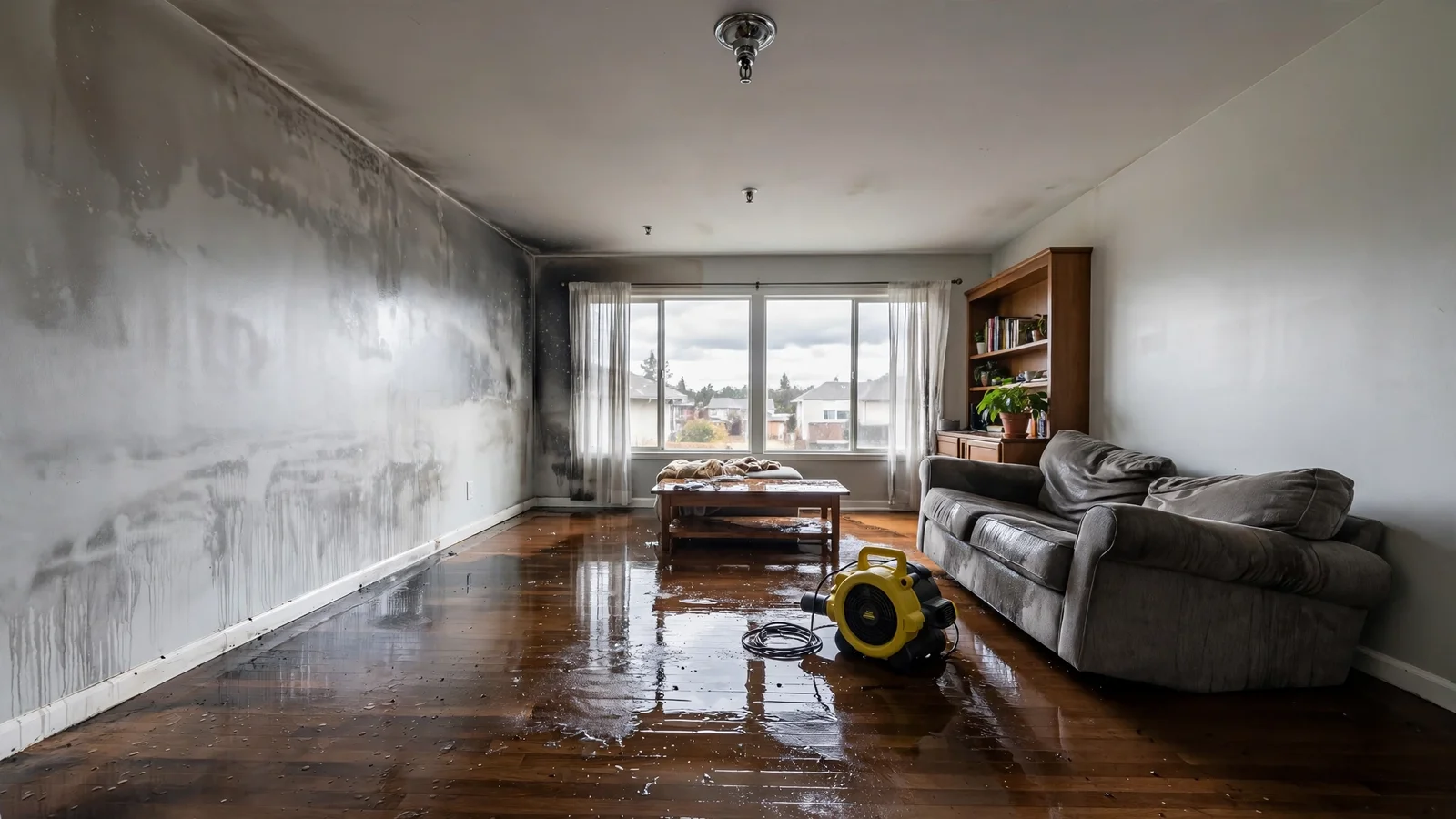
Water damage after a fire in Marietta comes from sprinkler discharge and firefighting water, which soak drywall, flooring, and belongings within minutes. Once the fire department clears the home as safe to enter, remove standing water fast, document everything for your insurer, and call for emergency water extraction at +1 (470) 804-0012 before mold and structural damage set in.
When the fire trucks leave, most Marietta homeowners expect the worst of it to be over. In many cases, it is not. A house fire is fought with water — hundreds, sometimes thousands of gallons — and it goes everywhere the fire went and a lot of places it did not. Sprinkler heads that opened over a kitchen fire keep discharging until the system is shut down. By the time the smoke clears, the water damage is often more widespread than the fire damage itself.
This guide covers what happens to a Marietta home after sprinkler or firefighting water, the order of operations once the home is declared safe, how long cleanup takes, and how insurance handles it.
If water is standing in your home right now after a fire, do not wait for it to dry on its own — call +1 (470) 804-0012 for emergency response in the Marietta area.
How Much Water a Fire Actually Puts Into a Home
A single residential sprinkler head discharges roughly 15–25 gallons per minute until someone shuts it off, and a fire hose line flows several hundred gallons per minute. Even a small kitchen fire can leave an inch of standing water across a floor, with far more hidden inside walls and under flooring. Fire sprinkler water damage starts the moment the head opens and continues until the system is shut down.
In Cobb County homes, that water has plenty of places to hide:
- •Slab foundations. Most newer Marietta homes sit on concrete slabs. Water pools on the slab under flooring and wicks into baseboards and drywall from the bottom up — it looks dry on the surface while the slab edge and wall plates stay wet.
- •Crawlspaces. Older Marietta homes often have vented crawlspaces. Firefighting water runs down through floor penetrations and collects under the house, where Georgia humidity keeps it from drying and feeds mold growth.
- •Attics and ceilings. Water sprayed at a fire on an upper floor or in an attic soaks insulation, which holds water like a sponge and sags ceilings below. Wet insulation loses its insulating value and has to come out.
- •Wall cavities. Water runs inside walls behind drywall, soaking framing, wiring, and insulation. There may be no visible sign for days — then paint bubbles and baseboards warp.
Fire water is not clean water. It carries soot, ash, and combustion residue, which puts it in a more serious contamination category than a burst supply line. (See our guide to water damage categories and classes.)
The First Hours: Safety First, Then Water
A home that has just had a fire is not a normal water-damage scene. Follow this order — the water can wait; your safety cannot.
- 1.Do not re-enter until the fire department says so. The fire department or a fire marshal must clear the structure. Smoke, weakened floors, and hidden hot spots are real hazards.
- 2.Turn off power and gas if instructed. If power is still on and water is near outlets, the breaker panel, or light fixtures, do not step into standing water.
- 3.Call your insurance company. Open the claim the same day. Tell them the home has both fire and water damage — the claim covers both, and documenting them together matters.
- 4.Document everything before anything is moved. Photograph and video every room: standing water, wet walls and ceilings, soaked belongings, soot patterns. Open drawers and closets — adjusters need to see what was wet, not just what was burned.
- 5.Shut off the sprinkler system if it is still running. Only do this if it is safe and you know how — there is usually a shut-off valve near the main sprinkler riser or the water meter. A sprinkler that keeps running after the fire is out does more water damage by the hour.
- 6.Move what can be saved — carefully. Soot is acidic and stains permanently if it is rubbed in. Carry items out rather than dragging them across wet, soot-covered floors, and label salvageable belongings room by room for the adjuster.
Why Fire Water Is Harder to Clean Than a Burst Pipe
A burst pipe floods a home with clean supply water. Fire water differs in three ways:
Contamination. Firefighting water mixes with soot, ash, and partially burned materials. Surfaces that look merely wet may carry acidic soot residue that etches glass, corrodes metal, and permanently stains porous materials.
Hidden spread. Hose streams are aimed at ceilings, walls, and roof structures — the water enters from above and runs inside the building envelope. Drying has to reach wall cavities, subflooring, and insulation, not just the visible floor surface.
The clock runs faster in Georgia. Wet drywall, wood framing, and fabrics in a warm, humid house can start growing mold within 24–48 hours. A home that sits wet for a weekend while the insurance process starts can develop a mold problem on top of the fire and water damage. (See our mold after water damage in Georgia guide.)
Fire Damage Cleanup: What the Process Looks Like
Professional restoration after fire water follows a sequence:
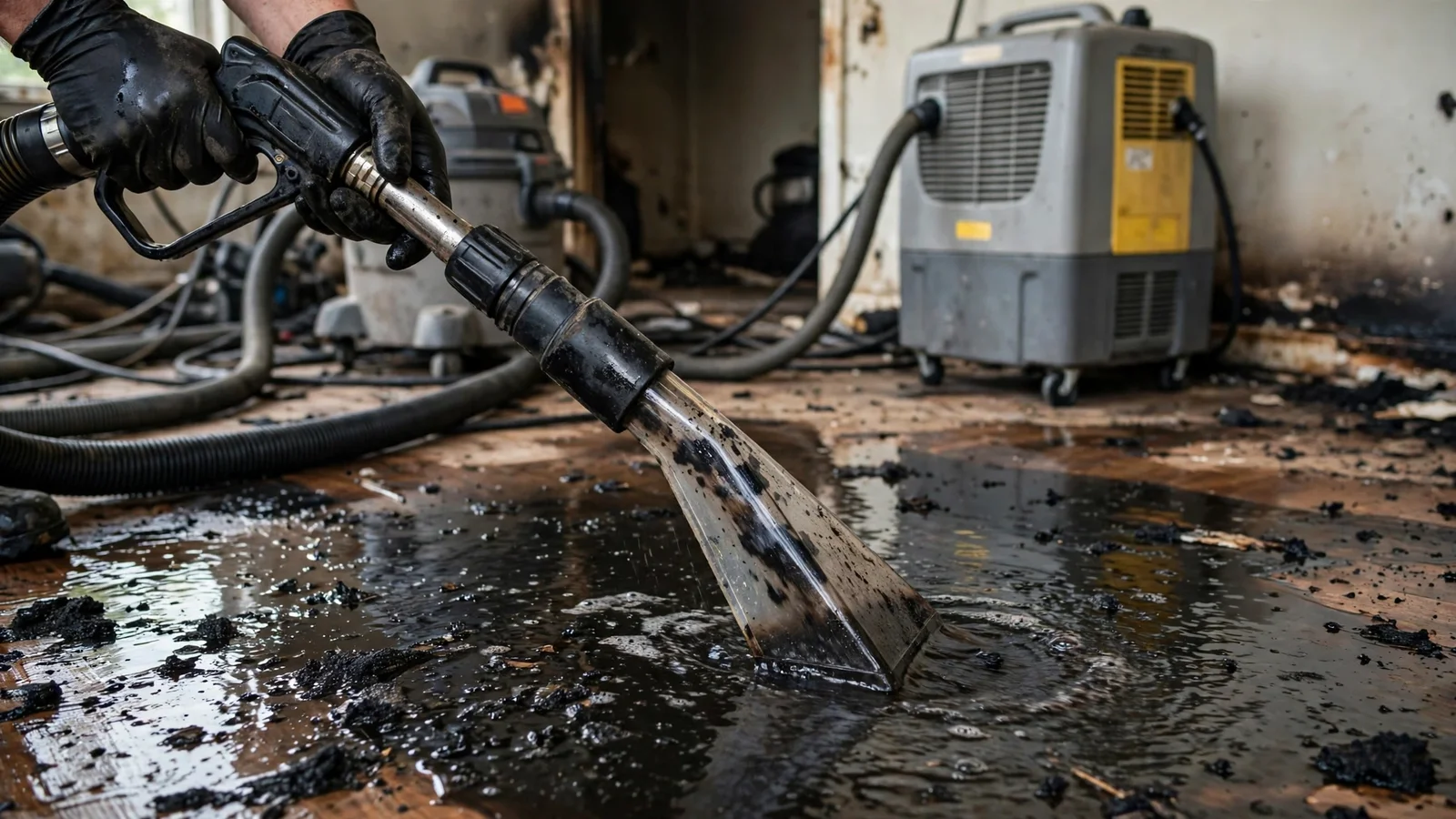
- 1.Assessment and moisture mapping. Technicians measure moisture in walls, floors, and ceilings with meters and thermal imaging to find water you cannot see.
- 2.Water extraction. Standing water is pumped and vacuumed out, including water trapped under flooring and in crawlspaces — the fastest way to stop the damage from spreading.
- 3.Removal of unsalvageable materials. Wet drywall below the water line, saturated insulation, and swollen subflooring are cut out and documented for the claim.
- 4.Soot and smoke damage cleanup, then structural drying. Surfaces are cleaned with methods matched to the residue type, and industrial air movers and dehumidifiers run for days, with daily moisture readings, until framing and subflooring reach target dryness. In Georgia's climate this is not optional.
- 5.Odor treatment and rebuild. Smoke odor penetrates porous materials, so odor treatment comes after cleaning — never before. Once dry and clean, the rebuild restores drywall, flooring, trim, and paint.
The full process from extraction to rebuild commonly takes weeks for a moderate fire, not days. That sequence — extraction, removal, cleaning, drying, rebuild — is the core of fire and water damage restoration. For a realistic sense of each phase, see our water damage restoration process guide.
Water standing in your home after a fire? Call +1 (470) 804-0012 for emergency response in the Marietta area — fast extraction is what keeps a fire loss from becoming a mold loss too.
Working With Insurance on a Fire + Water Claim
A fire claim with water damage is one claim with two damage types:
- •One claim, one adjuster, two damage lists. Give the adjuster a written inventory separating fire-damaged items from water-damaged items. Some belongings are smoke-damaged but dry; others are wet but unburned.
- •Keep samples, not everything. If the adjuster needs to see a ruined item, a photo and a small sample are usually enough. Ask the adjuster before discarding anything of value.
- •Get the drying scope in writing. Your restoration provider should give you a scope of work listing what gets dried, what gets removed, and why. That document protects you if the insurer questions a line item later.
- •Understand what is typically covered. Standard Georgia homeowners policies generally cover sudden and accidental damage from fire and from the water used to fight it. Damage from long-neglected maintenance, or the cost of repairing the item that caused the fire, is usually not covered. (See our Georgia homeowners insurance guide.)
- •Do not sign anything under pressure. After a fire, contractors may arrive quickly. You are not obligated to sign with the first one at your door.
What Marietta Homeowners Should Do Before a Fire Ever Happens
A few low-effort steps make a future fire-water loss far less painful:
- •Know where your sprinkler shut-off is. If your home has a fire sprinkler system, find the main shut-off valve now — usually near the riser or water meter — and make sure it turns. Label it. After a fire, every minute a sprinkler runs adds gallons.
- •Keep a home inventory. A phone video walkthrough of every room, once a year and stored off-site, is the single most useful thing you can hand an adjuster. Include serial numbers on major appliances.
- •Store insurance details where you can reach them. Policy number, claims line, and your agent's contact — kept in your phone and in a second location outside the home.
- •Check your smoke and CO alarms twice a year. Working alarms are what turn a major fire into a small one — and a small fire means far less water.
Frequently Asked Questions About Water Damage After a Fire
Is water damage from firefighters covered by homeowners insurance?
In most cases, yes. Standard Georgia homeowners policies generally cover water damage from firefighting and sprinkler discharge when it results from a covered fire loss. The fire and the water are handled as one claim.
How long does cleanup take after a fire and water damage?
Extraction and drying usually take several days to a week for a moderate loss; the full restoration including rebuild commonly takes several weeks.
Can I stay in my home after a fire if only part of it is wet?
Usually not until the home is inspected. Smoke residue, compromised electrical systems, and hidden structural damage can make a home unsafe even in rooms that look untouched.
Does sprinkler water damage count as the same category as a burst pipe?
No. A burst supply line is typically clean water. Firefighting and sprinkler water picks up soot, ash, and combustion residue as it flows through a burned structure, so it is treated as contaminated water.
Will my belongings survive if they got wet but didn't burn?
Many will, if handled promptly. Hard surfaces, metals, and some fabrics can be cleaned and dried. Porous items that absorbed soot and water — mattresses, upholstered furniture, particle-board pieces — are often unsalvageable.
How fast does mold grow after firefighting water soaks a home?
In Georgia's humidity, mold can begin growing on wet drywall, wood, and fabrics within 24–48 hours. Start extraction and structural drying as soon as the home is cleared safe to enter — waiting for the insurance process to finish first is a costly mistake.
Data Sources & Standards Referenced
The fire is out, but the water keeps working. If your Marietta home has standing water, soaked walls, or wet ceilings after a fire, call +1 (470) 804-0012 for emergency response — fast extraction now keeps a fire loss from turning into a mold loss too.
Related Guides
Marietta Service Hubs
Water damage restoration services are available across Cobb County municipalities:
Complementary Restoration Services
Explore additional specialized water damage, sewage, pipe repair, and flood cleanup services in Marietta.
Water Damage Restoration
Professional water damage cleanup, water extraction, structural drying, and damage restoration for homes, apartments, and commercial properties in Marietta and Cobb County.
Basement Water Removal
Standing-water removal and extraction, slab dehumidification, finished basement drying, and moisture remediation after heavy rain, sump pump failures, or plumbing bursts in Marietta.
Need Water Damage Restoration in Marietta?
Call now to discuss your water damage situation and the next steps.